Woodland - Hartley Green Infrastructure (led by St. Louis County)
Project Overview:
St. Louis County repaved Woodland Avenue from Snively Road to Anoka Street during the 2024 construction season. Although adding stormwater treatment is not a required part of the road project, the County and City recognized the value of adding treatment considering the proximity of Woodland Ave to the Hartley Natural Area. Previously, runoff from rain and snowmelt flushes salt, sand, other pollutants, and litter from the 117-acre Woodland neighborhood into Tischer Creek. If not properly managed, this polluted runoff can negatively impact this designated trout stream.
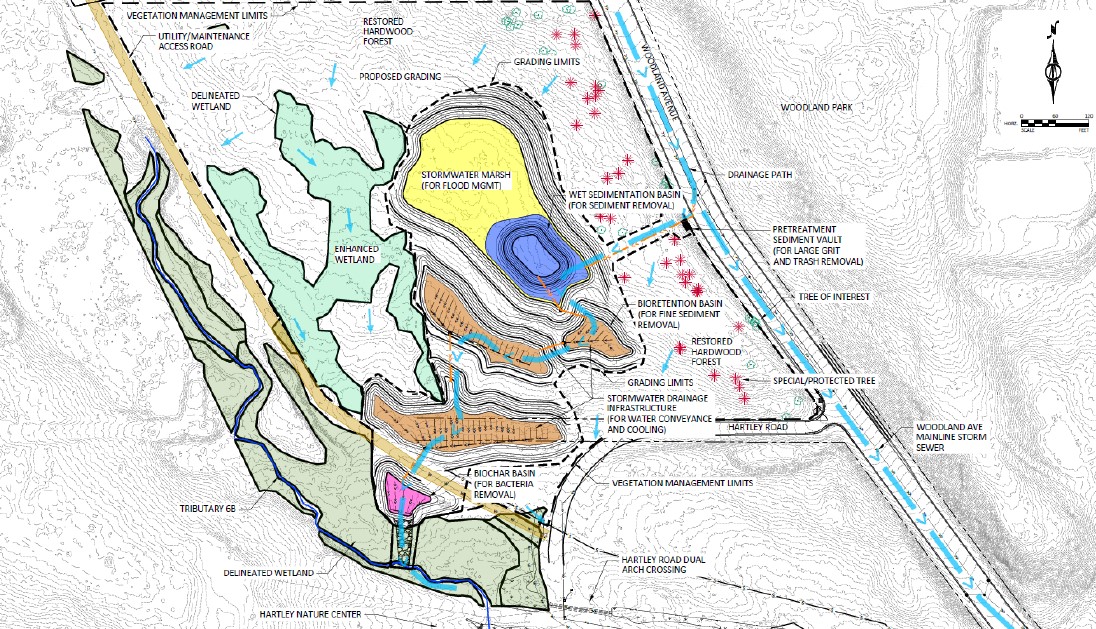
The County and City of Duluth elected to work together to integrate “green infrastructure” into this road project. Green infrastructure helps to protect streams and lakes by using vegetation, soil, and grading to help slow, capture, and filter stormwater runoff. The project diverts some of the stormwater collected and conveyed down Woodland Avenue into specially designed basins and constructed wetlands where runoff is stored and released at more controlled rates with pollutants removed through settling and filtration. The results will include cleaner, cooler water and reduced erosion, improving the wildlife habitat and water quality of Tischer Creek.
The project was constructed in the northeast corner of Hartley Park adjacent to Woodland Avenue in an area heavily infested with buckthorn, tansy and other invasive plants. By removing the dense invasive vegetation and planting a diversity of native species, the constructed naturalized stormwater elements (pond, wetlands, etc.) and surrounding uplands will be restored as attractive, diverse, native plant communities, which will provide improved habitat diversity and ecological health for the benefit of butterflies, birds and other wildlife.
Funding Source:
St. Louis County was awarded state and federal grant funding to support the project. Federal funding was provided through the U.S. Army Corps of Engineers from the Great Lakes Restoration Initiative. State grant funding was sponsored by the Minnesota Board of Soil and Water Resources through the Clean Water Land & Legacy Amendment.



Project Partners: