Emerald Ash Borer (EAB)
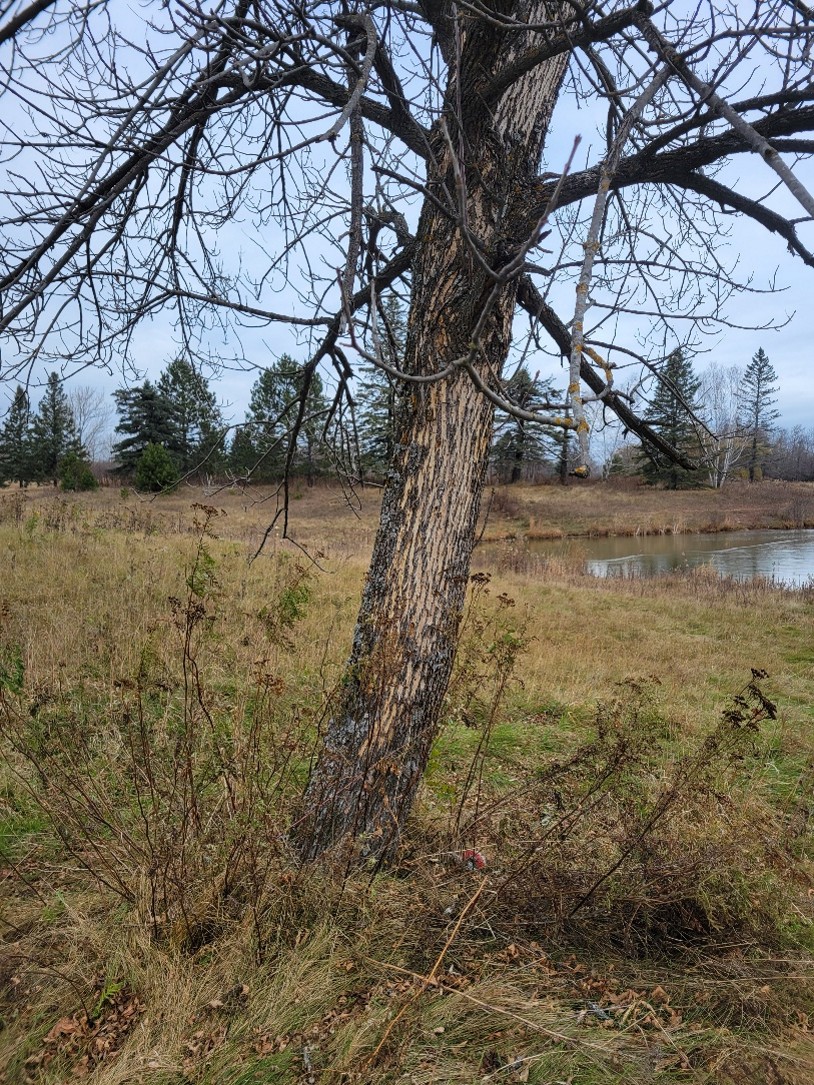
One sign of EAB infestation is stripped bark, as seen on this dying ash.
Woodpeckers will strip the bark looking for EAB larvae.
Emerald Ash Borer (EAB) is a non-native wood-boring beetle that attacks ash trees. It is an invasive pest that has rapidly killed tens of millions of ash trees in the US and Canada. The larval stage of EAB feeds under the bark of ash trees, cutting off the flow of water and nutrients, resulting in the tree’s death. It is nearly 100% fatal to all three native ash species in Minnesota and is considered one of the most destructive forest pests ever seen in North America.
The City continues to plant replacement trees for ash along City streets and boulevards. In an effort to increase our canopy's diversity and resilience to future pests and diseases, the City is purposefully planting a wide variety of tree species.
The City has been fortunate to receive several grants to support its ash removal efforts, including grants from the Great Lakes Restoration Initiative through the U.S. Department of Agriculture, Forest Service, and the Minnesota Department of Natural Resources.

What the City is Doing
Emerald Ash Borer (EAB) was detected in Duluth in late 2015, but recently-discovered infestations seem to indicate the borer has been here for a few years already. Unfortunately, widespread ash tree die-off typically occurs within a few years of a local EAB detection. EAB-infested ash trees become brittle and dry and decline very quickly. Ash trees that have died from EAB have a greater risk for sudden failure, potentially causing harm to people and property.
You may have noticed some trees in Duluth neighborhoods are adorned with green ribbons. These ribbons are meant to raise awareness of the EAB and the consequences of infestation among ash trees the City now faces. However, a majority of these ash trees are fated to die from this invasive pest.
Among Duluth’s boulevard trees, ash is second only to maple in numbers. Approximately 3,000 boulevard trees are ash species.
The City of Duluth is testing out the use of a biological control method with stingless wasps. The wasps consume EAB larvae and can help prevent the spread of EAB onto other ash trees. The test area is restricted to Hartley Park. The wasps pose no dangers to humans.
Emerald Ash Borer Management Plan (Archived)
The Emerald Ash Borer Management Plan provides guidance to City staff on the approved management options for city-managed ash trees in response to the emerald ash borer infestation. The Plan was adopted by the Duluth City Council on December 12, 2016.
The rapid development of the EAB infestation since that time has prompted an update to the 2016 Plan to update factual information. The intent of the plan remains unchanged. The revisions were presented at two Natural Resources Commission meetings in November and December 2022. The Commission recommended approving the revisions, which were then approved by City Council on February 13, 2023.
What Residents Can Do
Adult borers typically fly less than ½-mile from their emergence tree. Most long-distance movement of EAB has been directly traced to human movement of ash firewood and other infested materials. This is because the larvae feed and pupate within an inch of the bark and can emerge up to a couple years later. For this reason, the Minnesota Department of Agriculture has established quarantine restrictions for affected counties that regulate the movement of ash logs and lumber, ash tree waste, ash chips and mulch, as well as ALL Hardwood firewood.
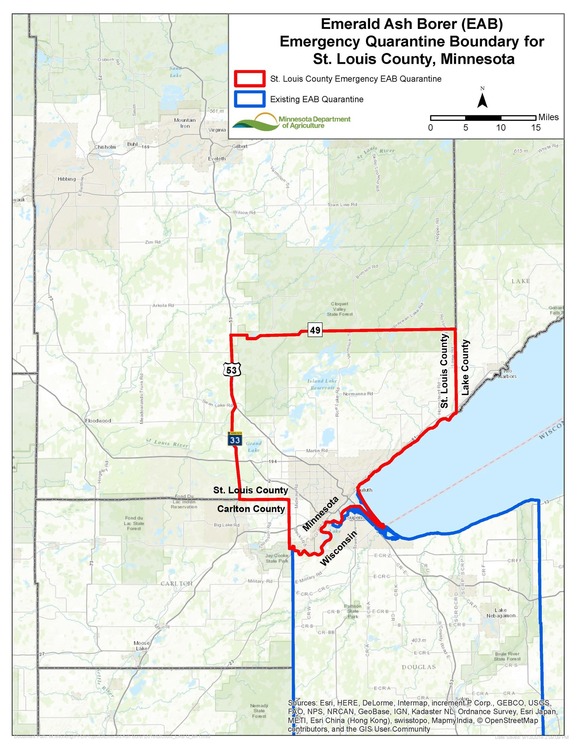
The City will be managing public trees - those along our streets and boulevards - but private homeowners are responsible for any ash on their property.
Click this link to the Minnesota Department of Natural Resources webpage for guidance on how to identify ash trees:
Every ash in Duluth will eventually die, unfortunately. If you do have an ash tree on your property, there are three options for dealing with it:
- You can preserve your tree by injecting it/treating it with a pesticide.
- You can remove the tree. Here is a link to tree service contractors licensed in the City of Duluth.
- You can wait and do nothing.
Removing the tree while it is still alive is less expensive and dangerous than letting it weaken and die from EAB. Dead trees can be brittle, dry, and fail unexpectedly. If you need help deciding, contact a tree care service or a professional arborist to help you decide what you should do with your ash trees.
The City will be providing more information to homeowners and private businesses on removing ash from private property during the spring and early summer of 2026. Check back here for updated information.
If you are removing potentially hazardous ash trees on your property, please consider planting another tree. It will help keep our urban forest healthy and resilient. For a list of possible replacement tree species, click this link to the City of Duluth Urban Forestry webpage.